I still want to know how things work more than I want to look like I already know.
This is the personal, longer version. For what I actually do for teams, see Work with me →
My dad read encyclopedias instead of going to college. My mom went back to school when I was in first grade and brought me to lectures when childcare fell through. My grandmother handed me art supplies before anyone judged whether I was good at it.
I had three older brothers running live prototypes of how to solve life's challenges before I had to. All of it taught me to observe first and stay curious - the same way I open an engagement: no standing to protect, nothing I already know.
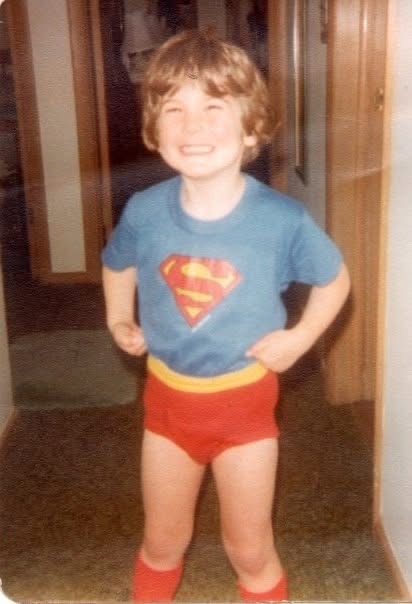
Curious before I had a reason to be anything else.
Plenty of people can hear what isn't being said. Fewer will say it when it actually costs them something. Most who try say it badly, as an accusation, and the room closes for good - what's left is misalignment at best, siloed teams at worst.
Yes, and… is a discipline before it's an attitude. You take what you were handed and put it to work together rather than arguing with it. That isn't a nicety. It's the technique I trust for putting a new idea into a room without making anyone in it wrong.
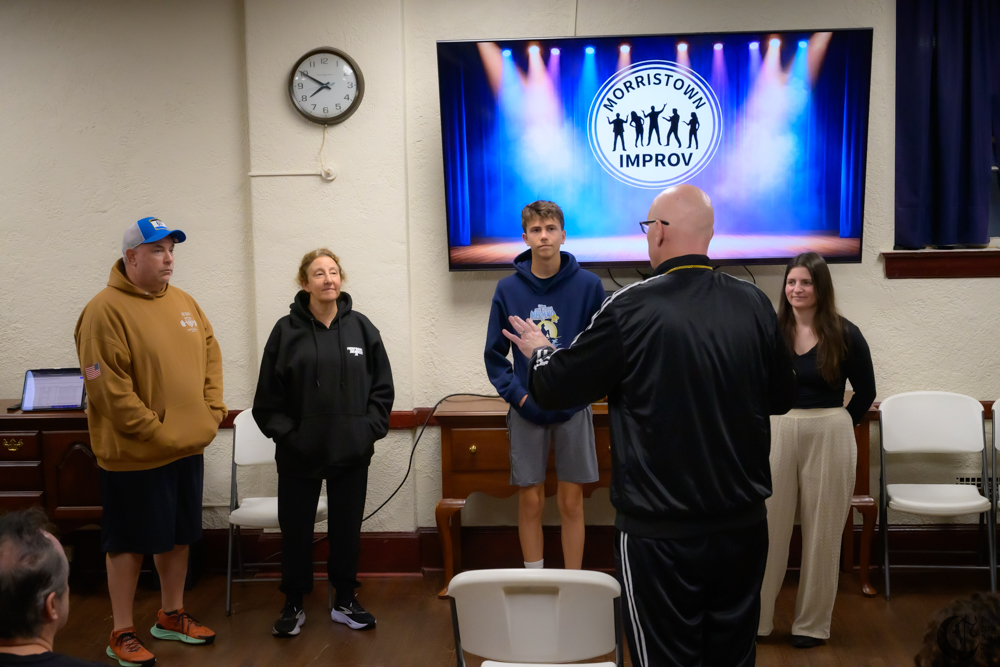
Morristown Improv - the same listening, on a stage instead of in a workshop.
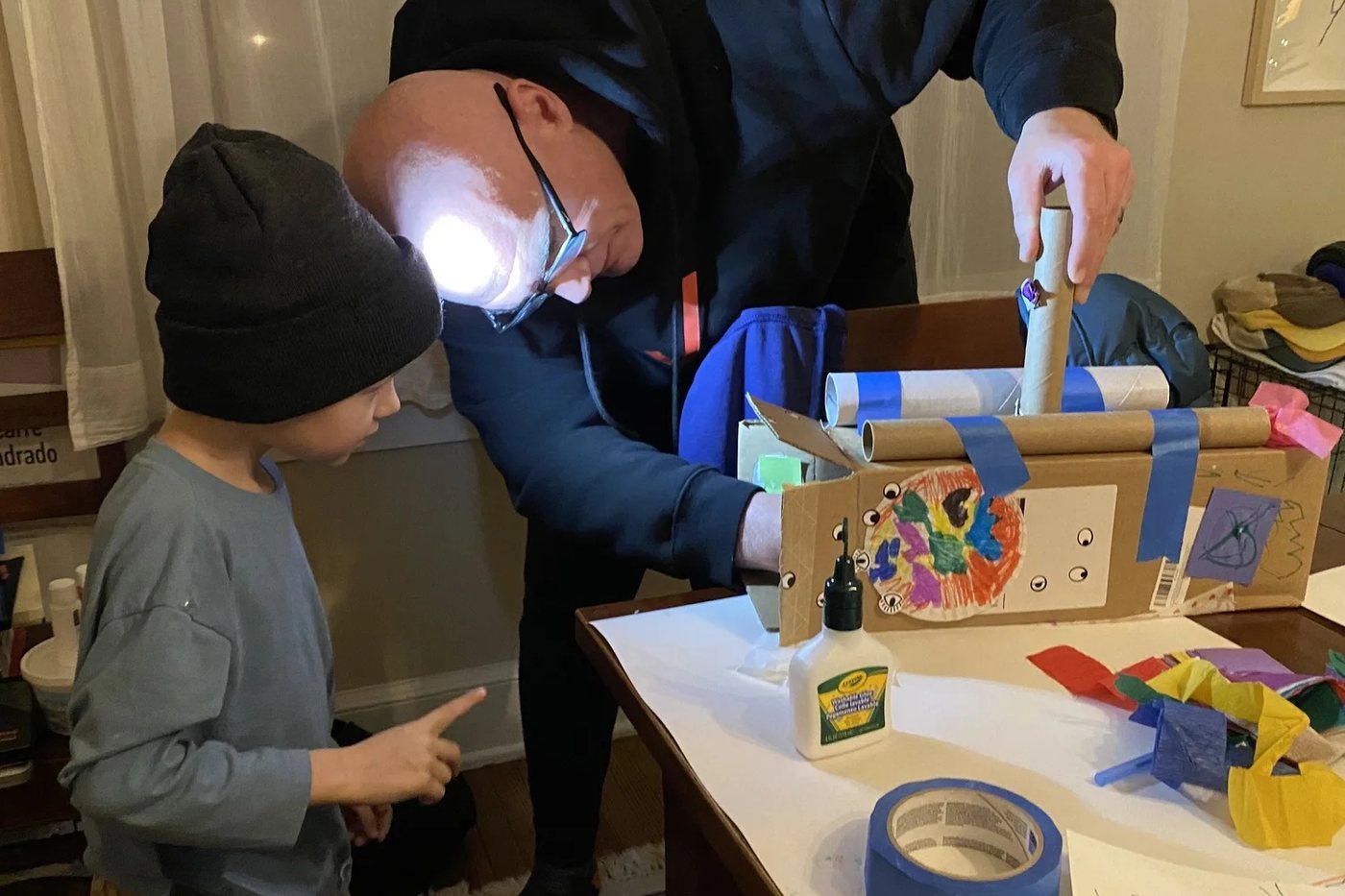
In Michelle's approach you don't hand a kid a picture to copy. You give them a prompt toward a goal, then watch what they're already doing and follow their process until it gets somewhere. That somewhere can be magic.
I'd been running at this with teams for years before I noticed, while still believing a leader was supposed to arrive with the answer already.
Building a cardboard robot "laser arm" with my nephew Noah - following his process, not mine.
The retro is where it always shows, one way or another. Either it produces concrete, incremental change, or it becomes a ceremony for saying what wasn't said earlier - performed, not practiced. Left that way, the friction doesn't go away; it just sits there untreated, and trust and delivery erode with it.
Agile product delivery systems and ways of working are the third training, improvisational philosophy fused with core product and project-management discipline, and what it actually teaches has nothing to do with ceremony: alignment gets built before the sprint starts, not recovered during it. Accountability, exit criteria and results only work when everyone agreed to them while there was still time to disagree.
Phone service, billing, getting their jobs done - the stuff nobody notices until it breaks. I shipped AT&T's first ML/AI-powered revenue product, and an AI shopping flow at Verizon that people adopted without being paid to.
Before any of that I produced television for E!, A&E, TV Land and Animal Planet, and experiential marketing for American Express, Shell and iRobot. Across all of it, teaching improvisation and performing improv is what taught me to find the why and the so-what behind the work together, not just delivering a dictated outcome.
Still practicing how to get a room to hear each other and build something magical from it.
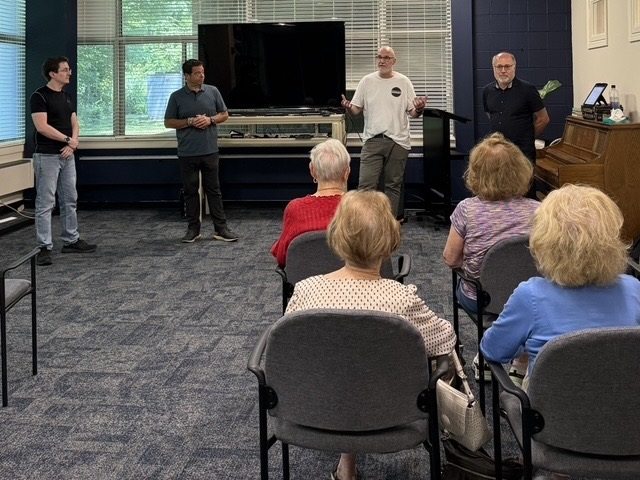
Morristown Improv, Morristown NJ
Most of what's above started as a question I was working out loud before it became a paragraph here. I keep asking those questions on Substack - product, AI and alignment, same instinct, no client on the other end of it.
Read the Substack →If any of this is why you'd want me in the room, the actual work lives on the main site.
Start with a conversation →